

First Red Bull
Updated: Apr 28

From duck herding in Thailand to daredevilry at the edge of space, the story of the first Red Bull is as improbable as it is bonkers. While the energy drink enjoys aspirational status today, it started life as something far less glamorous – a cheap but essential pick-me-up for marginalised manual workers. Buckle up, because what followed was not simply the rise of a drink, but an incredible act of cultural reinvention that transformed a humble homemade tonic into one of the most powerful lifestyle brands in the world.
The remarkable story starts with Chaleo Yoovidhya, the visionary Thai founder, who has a rags-to-riches narrative arc crazier than any Hollywood film.
Not a lot is known about his early life, except that he was born to impoverished parents who were living something of a hand-to-mouth existence. Thongyu, his mother, was of Thai descent. Seng, his father, was Chinese and had immigrated to Thailand from Wenchang, a city on the tropical Hainan Island, sometime around the 1911 Revolution.

The uprising saw an end to the Quing imperial dynasty and the region spiral into the hands of dangerous warlords, which in turn forced mass emigration, particularly to Thailand (called Siam at the time). Originally, the family went by the Chinese surname Shu (or Siew) but legislation by King Rama VI in 1913 meant all new Chinese residents had to adopt Thai surnames. The family chose Yoovidhya, which is derived from two Thai words: Yoo, meaning ‘to live’ and vidhya, meaning ‘knowledge’. So, essentially, meaning ‘living a life of wisdom’, a name that has a large dose of nominative determinism about it.

The family eventually settled in Phichit province in lower northern Thailand, about 200 miles away from Bangkok. A particularly rural and agricultural area, the growing Yoovidhya family made their living primarily as duck farmers and fruit traders.
Born on 17th August 1923, Chaleo was the third of five children. Like the rest of the family, he had little formal education and accepted his role as a small-scale labourer alongside the rest of his family. But, as it turned out, he was destined for bigger things than duck wrangling.
Sometime in the early to mid 1940s, when he was in his twenties, Chaleo headed to Bangkok, which had better economic prospects in the period around World War II than Phichit province. He started working a bus conductor, a common entry-level job for rural migrants, but his natural charm, intelligence and street-smarts saw him swiftly move to pharmaceutical sales. He specialised in selling antibiotics, specifically low-cost treatments to labourers and low-income workers – a market which would prove vital to his future business success.
On 27th March 1956, Chaleo founded his own company, TC Pharmaceutical Ltd, his premises a rented space in Rambuttri Alley in Phra Nakhon district (in the Old Town), from which he distributed antibiotics.
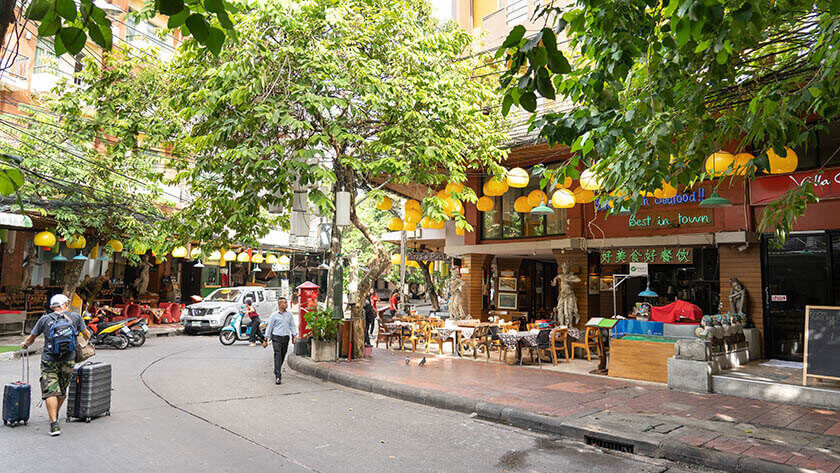
Like his sales job, he focused on supplying to poorer strata of Thai society, those in more labour-intensive jobs, who couldn’t afford imported medicines. In 1962, he subtly renamed his business TC Pharmaceutical Industries and increased his output by inventing and selling a range of over-the-counter syrups and medicines alongside making his own antibiotics, like TC-Mycin, on-site.
As it proved, his passion for the pharmaceutical business was all a testing ground for his most famous and lucrative product – a cheap energy tonic aimed at combatting tiredness among hard-working manual labourers.
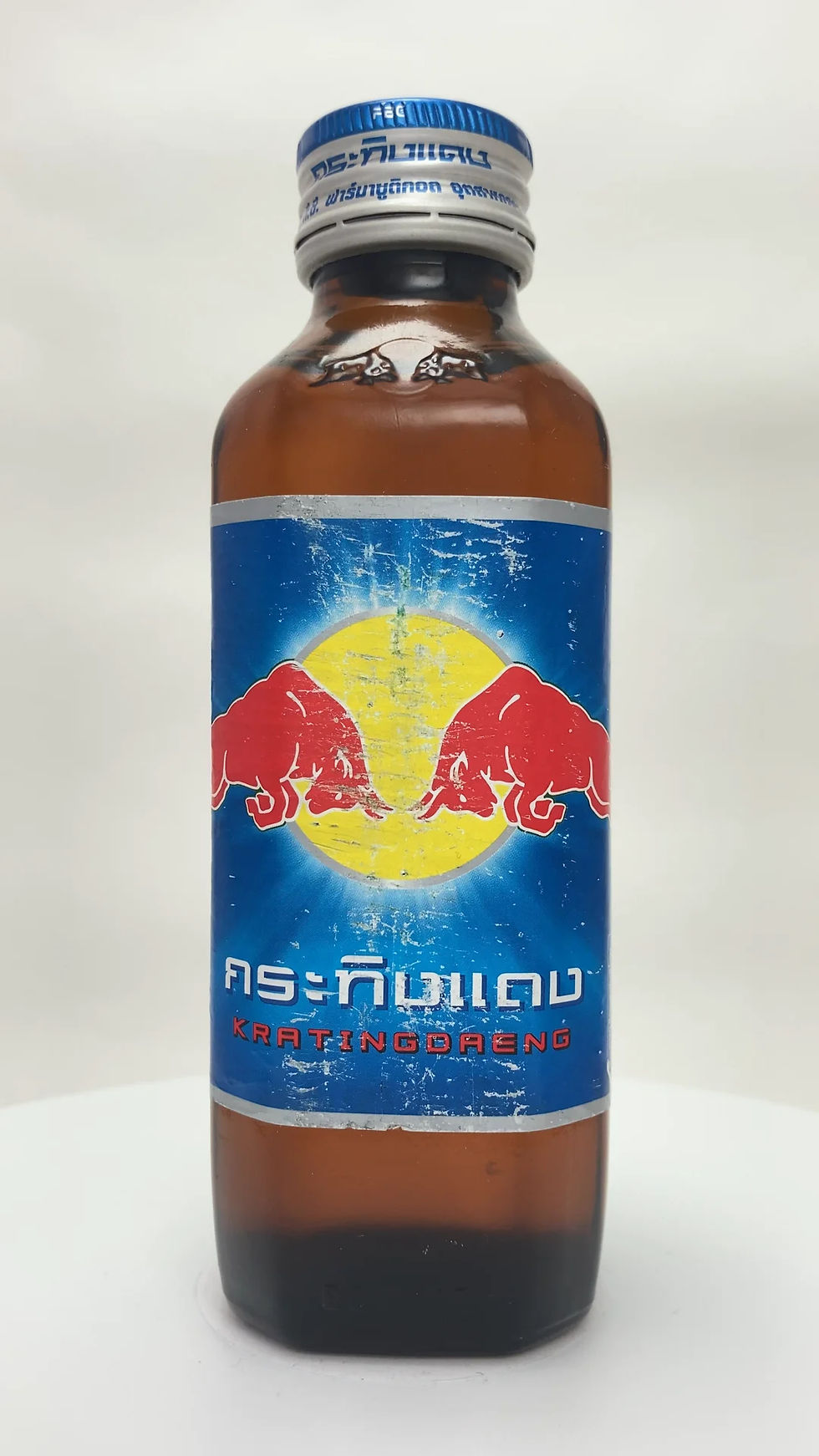
He had invented the formula in 1975, which included caffeine, taurine, glucuronolactone and a very high sugar content that immediately appealed to the Thai sweet tooth. He started selling it a year later. Called Krating Daeng or ‘Red Gaur’, named after a type of massive wild bison native to Thailand, it was a thick, syrupy, non-carbonated tonic sold in a stubby, medicinal-looking amber bottle. Its genius was that it didn’t need to be refrigerated, making it super convenient for a blue-collar target market that included everyone from truck drivers to farmers (basically anyone who needed to stay awake or get an energy kick).
Chaleo later said the idea for the drink came to him as a flash of “divine inspiration”, but we know that South Korean and Japanese energy drinks were already popular in Thailand – but as ‘imported’ goods, were often far too expensive for the working class to afford.
With a natural flair for marketing, he created a logo that depicted two bright red charging gaurs silhouetted by a huge yellow sun, a symbol of strength, resilience and endurance. A logo millions of people will still instantly recognise today.

Within a year of his first bottle being sold, Krating Daeng’s sales had overtaken all but one of its competitors. By 1978, it was Thailand’s top-selling energy drink, perhaps thanks in part to Chaleo’s unconventional marketing approach – he also started promoting his tonic to the Muay Thai (Thai boxing) community, the nation’s beloved home-grown sport.
So Krating Daeng was proving a success and Chaleo’s entrepreneurial oomph had pulled him out of poverty to become the head of a prosperous and growing Thai business. And that could have been the whole story, were it not for another twist in the tale – when an Austrian businessman called Dietrich Mateschitz took a lonely business trip to Bangkok.
So, let’s leave Thailand for a moment and learn a little about Dietrich.
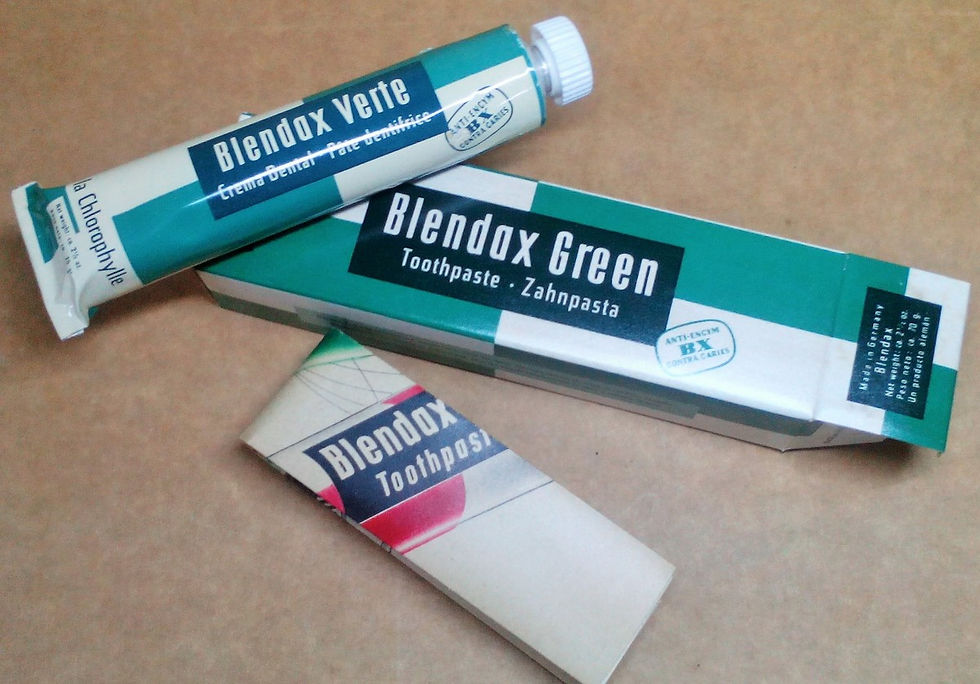
He was born on 20th May 1944 in Sankt Marein im Mürztal, Styria, the state known as Austria’s pantry, to teacher parents. Not much is documented about his early life, but we know at 18 he went to Vienna University of Economics and Business, finally finishing his degree after 10 years – a leisurely approach he puts down to having to entirely support himself as a ski instructor in the winter and a tour guide in the summer. He graduated aged 28 and took a marketing job at Unilever selling detergents. After a decade or so, he became Marketing Director for Blendax, a German brand that made personal hygiene products and toothpaste, a white-collar corporate job that took him all over the world.
So far, so ordinary.

Everything changed on his business trip to Thailand in 1982, where he was visiting Blendax’s local distributor, a certain TC Pharmaceutical Industries. Like most Western travellers coming East, he struggled with jet lag – until a local colleague offered him a bottle of Krating Daeng. Dietrich was astonished with the results – more energy, more stamina, zero jet lag. He immediately saw its potential beyond Thailand and became somewhat obsessed by the tonic for the next year or so, until he finally ended up contacting Chaleo directly with a compelling proposal.

Dietrich sold a dream of partnership and expansion. He talked about an untapped opportunity in Europe. About tweaking the brand and recipe for a new audience – adding carbonation, reducing the sweetness and changing the name to make it more understandable and meaningful. Chaleo would look after production, he said, while he would handle distribution and marketing. The pitch went perfectly, Dietrich resigned his corporate job and the two businessmen struck a deal in 1984, forming Red Bull GmbH, a privately held company established in the scenic Austrian village of Fuschl am See (where it’s still based today), with each partner holding a 49% stake, and the remaining 2% going to Chaleo’s son, Chalerm.
The business wasn’t without its initial challenges. They needed serious funding to get their new venture off the ground in Europe, so Dietrich approached outside investors. But none bit and he always left the boardrooms empty handed; no one could see the potential of this exotic looking Thai product. Eventually they had to resort to funding the business themselves, with each investing £375,000 (around $500,000).

In those critical first few months, Dietrich made several business and reputation-defining decisions, in close consultation with his friend Johannes Kastner, owner of German advertising agency Kastner & Partners. The first was the name and logo. He rightly surmised people might be suspicious of a drink called Krating Daeng – so he anglicised it to Red Bull, essentially how it translates anyway (though a bull is better known than a gaur!). He also decided to keep the logo and iconography – simplifying the design a little to make it even more iconic. The other major alteration was to repackage the original medicinal bottle into a slim 250ml aluminium can – the silver backdrop adding to the modern, sleek and energetic image. The pièce de résistance was the brand’s new tagline, ‘Red Bull Gives You Wings’. Coined by Kastner in 1992, it perfectly and playfully captured the emotional benefit at the heart of the drink without resorting to a bullet-pointed list of ingredients. (The first attempt at a tagline had been a little more forgettable: “So awesome that polka dots will literally fly off your tie!”).
In contrast to its marketing in Thailand, these changes instantly positioned the drink as a more aspirational lifestyle product rather than a cheap pick-me-up. Suddenly it appealed to a younger, more adventurous generation prepared to pay a premium price – clubbers, adrenaline junkies, sports enthusiasts and thrill seekers.
Red Bull launched for the first time in Austria on 1st April 1987. While it might have been April Fool’s Day, the product was no joke. After some initial regulatory teething troubles, Red Bull sales hit 1.2 million cans a year later – at first a hit with clubbers wanting to dance all night.
With budgets tight, Dietrich got creative with his marketing in those early days. Rather than traditional advertising on billboards and newspapers, he went more ‘guerilla’, handing out samples directly to his audience – at universities, nightclubs and extreme sports events. During their nightclub promotions, he would often throw empty Red Bull cans onto the floor, to give the dancers the impression the drink was more popular than it was!

Outside Austria, Dietrich was still struggling with regulatory approval in some European countries – particularly Germany – due to the drink’s high perceived stimulant effect. This turned out to be a blessing in disguise as German clubbers resorted to ‘smuggling’ cases of Red Bull over the border to get their fix, which only heightened the brand’s cult reputation and desirability amongst its anti-authoritarian target audience. This extreme behaviour gave Dietrich the idea to align the brand with extreme sports more generally – and he sponsored his first event in Austria's Dolomite Mountains in 1988. Called Red Bull Dolomitenmann, it was an extreme sports relay (mountain running, paragliding, mountain biking and whitewater kayaking), which came to be known as the “toughest team contest under the sun”. He also sponsored Austrian ice hockey's EC Salzburg during the 1987-88 season (Red Bull would eventually buy EC Salzburg outright in 2000).
This was the start of a highly successful sponsorship spree. In 1989, Austrian Formula One racing driver Gerhard Berger became the first athlete to be sponsored by Red Bull. (Today, Red Bull sponsors over 900 athletes in over 200 sporting disciplines).
The popularity of Red Bull was starting to snowball. In 1992, it launched in Slovenia and Hungary, which was the stepping stone for the rest of Europe to soften their regulatory stance. In 1993, it reached the UK. In 1994 it was officially allowed to be sold in Germany. Sales soon topped a million cans a day.

The first Flugtag (“flying day”) was held in Vienna in 1992. It was a bonkers but brilliant event that really captured the imagination of the public – a sort of wacky races airshow that challenged teams to launch homemade, human-powered flying machines off a six-meter platform into water. Today, it’s held annually in over 35 cities around the world, attracted thousands of spectators (the largest crowd was in 2012 in Cape Town, when an astonishing 220,000 people turned up to watch the madness!).
By the early to mid 1990s, Red Bull was established across Europe and was about to debut in the United States after Jack Dadam, a US drinks distributor, noticed the drink was “everywhere” while on a business trip in 1995. He made the deal a few years later, becoming the first Red Bull distributor in the U.S. on 7th April 1997, selling and delivering to stores in California, Arizona and Utah from his headquarters in Santa Cruz.

It was in the USA that one of the most famous mixed drinks – the vodka Red Bull – was first enjoyed. It was said to have originated in a San Franciscan dive bar called Butter in 1999, when the bar owners made a $50,000 deal with Red Bull to feature it on their menu. They mixed it with Svedka vodka, charged $8 and served it in a signature mason jar. It quickly went stratospheric, becoming a staple with the rave scene on both the East and West coast.

By 2001, Red Bull had expanded to 40 countries and sold its billionth can. It was now a global phenomenon that seemed to own everything edgy, including dance, music culture as well as extreme sports. The pinnacle probably came on 14th October 2012, when an Austrian adventurer called Felix Baumgartner completed a jaw-dropping, death-defying stunt by freefalling from the edge of space. Called the Red Bull Stratos mission, his jump from 39,000 metres set a record for the highest number of concurrent live streams in YouTube history, with some reports saying it was watched by over 9.5 million users.
The two founders had become wealthier than they could ever have imagined and ran a huge global brand and media empire. Yet despite their business acumen, they were very different people at heart.
Ironically, Chaleo Yoovidhya represented the very antithesis of the extreme and adrenaline-fuelled values of Red Bull. He had turned into something of a recluse in Thailand, shunning the media and not giving interviews for over 30 years. Instead, he focused on building his business and became Thailand’s third-richest man with a net worth of $5bn (£3.2bn). Chaleo married twice and had 11 children, five by his first wife and six from his second. He passed away on 17th March 2012 aged 89.
Dietrich Mateschitz by contrast, was at first the face of Red Bull’s public philosophy – bold and relentlessly unconventional. Gradually, however, he too sought to live a life out of the public eye (once buying an Austrian gossip magazine that showed too much interest in his personal life). He never married but had a son called Mark – who later took over his 49% shareholding of Red Bull – with partner Anita Gerhardter. He was a licensed pilot, with a collection of old planes housed in Hangar-7 in Salzburg and owned a remote country estate on the shores of Wolfgangsee, as well as Thalheim Castle, near Vienna, and Laucala in Fiji, an ultra-luxury private island resort. He died of cancer on 22nd October 2022, in St. Wolfgang im Salzkammergut, Austria aged 78.
Today, Red Bull sells nearly 14 billion cans annually, with revenues exceeding $12 billion. And while the brand may now be synonymous with extreme sports and success, its roots were far more grounded. When you strip away the caffeine and the clever marketing, it’s the story of two completely different worlds colliding, two astute entrepreneurs creating something much bigger than either could have imagined alone. In some ways, they gave each other the wings to transform a local remedy into a global icon.


Comments