

First Dr Pepper

Dr Pepper is a genuine drinks enigma.
It’s one of the most popular soft drinks in the world yet literally no one can agree on what it actually tastes like.
It’s officially America’s oldest ‘big’ soft drinks brand, created before Coca-Cola and Pepsi, yet the flavour profile feels like it was invented for modern hipsters.
It has a peculiar name, which doesn't sound remotely appetising, yet it generates more than $5 billion in annual retail sales.
Even the U.S. Food and Drug Administration struggle to categorise it. It's officially not a cola, not a root beer and not a fruit-flavoured soft drink.
So what the hell is it?
The answer begins behind the marble counter of a Victorian drug store in Texas, where a curiously mild-mannered pharmacist set out to do something nobody had attempted before: bottle the smell of the room.
So let’s head deep into nineteenth century America to find out how he did it…

The year is 1885. We’re in Waco, Texas (population around 12,000 at the time). Baking hot in the summer, cool in the winter. Only twenty years had passed since the end of the Civil War, and railways are beginning to stitch the continent together. The city is growing every day. Fortunes are being made in cotton (Waco was known as the ‘Cotton Capital of the South’). The telephone had just arrived (in 1881) but electric streetlights are still one year away. The McClelland Hotel stands on the corner of 4th Street and Austin Avenue, and on the bottom floor is Morrison's Old Corner Drug Store, owned by a man called Wade Morrison.

It was certainly nothing like a modern pharmacy, which are clinical, antiseptic places where you pick up medicines in a hurry. Sure, old US pharmacies had a corner dedicated to dispensing drugs, but it was so much more than that – think polished marble counters and a scene-stealing soda fountain with rows of glass bottles filled with exotic syrups, mirrors everywhere and ornate brass taps.
Young couples met there on dates. Businessmen held informal meetings with a fizzy drink in hand. Children spent their pocket money on super-sweet concoctions mixed before their eyes. It was the wholesome centre of the community, like an intergenerational coffee shop, except your barista was a chemist.
These soda fountains existed because America had become obsessed by the medicinal properties of carbonated water in the 1880s (which was said to cure everything from gout to indigestion). The craze had begun in Europe almost a century before – read the fascinating story here – but was embraced enthusiastically by pharmacists, who grabbed the opportunity to start prescribing sparkling water to their customers. Gradually they added herbal syrups to help the medicine go down and then other flavourings, made from fruits and spices.

The idea exploded. And suddenly every pharmacy had a soda fountain, offering their customers a cornucopia of exotic recipes from all over the world. In an age before refrigeration, it was one of the few places where ordinary people could experience such an astonishing variety of tastes.
It was so popular, in fact, pharmacists had to hire a dedicated assistant just to operate the soda fountain. Part chemist, part bartender, part entertainer, these craftsmen in a lab coat would memorise and make 100s of recipes and think up new ones to suit new clientele. Rather unfortunately, they were called ‘soda jerks’, named because they would furiously jerk the tap handle back and forth all day!
And like other professions, it even developed its own language, often based on cocktail trends at the time. A customer could order an “egg phosphate” (a citrus pick-me-up containing raw egg). Others preferred a “rickey”, a “fizz”, a “flip” or a “cobbler”. Every region had local favourites, and ambitious soda jerks were constantly competing to invent the next sensation.
These nineteenth century pharmacies became, quite accidentally, one of history's greatest flavour innovation laboratories. And looking back, it seems inevitable that someone would eventually create a drink unlike any the world had tasted before.
The only surprise is that it happened in Waco.

Enter Charles Courtice Alderton, newly arrived city resident.
Born in Brooklyn, New York, on 21st June 1857, he was the eldest of five children to English parents who had emigrated to America. (His father, Charles Alderton, was 22 at the time and his wonderfully named mother, Hephzebah Courtice, was 26 years old).
His education was unusually international for the era. After spending his teenage years at Framlingham College in Suffolk, he returned to the United States to study medicine at the Texas Medical College in Galveston, the forerunner of today's University of Texas Medical Branch. While in the city, he met his wife Lilian ‘Lillie’ E. Walker, daughter of J. B. Walker, a skilled cistern maker, whom he married on 15th October 1884 (as recorded in the Galveston County marriage records, book H, page 370) at her father’s home on East Avenue L between 10th and 11th.
After graduation, the newlyweds decided to move to Waco, about 250 miles away, where Charles could start his career as a pharmacist.
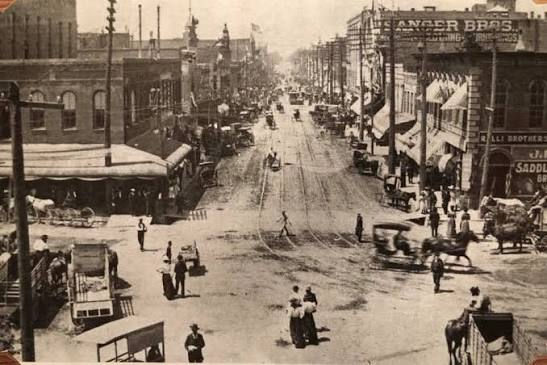
He got his first job at Morrison's Old Corner Drug Store, right in the heart of bustling downtown. His primary role was to mix and dispense drugs of course, but his background in chemistry made him uniquely qualified to safely handle carbon dioxide and create medicinal tonics at the soda fountain too. And just standing in this unique environment every day – part doctor's surgery, part sweet shop, part café and part chemistry lab – seemed to get his creative juices flowing in an entirely new way.
Think of the scene. In a busy store, around 400 people were coming and going a day, with most staying for a refreshing soda. The shelves were groaning with bottles of all sorts of wondrous flavours: cherry syrup, vanilla extract, lemon essence, raspberry cordial, liquorice, almond, spices, citrus oils, medicinal tinctures, root beer. Every few seconds another bottle would be uncorked, another splash of syrup poured into sparkling water, another aroma released into the room.
According to the Dr Pepper Museum's archives, Charles became fascinated (obsessed?) by the way all these flavours and aromas mingled together in the air. And for reasons known only to himself, he wanted to create a drink that tasted like the smell of Morrison's Old Corner Drug Store itself.
It's one of the strangest but most charming creative ambitions in food history. Most inventors try to imitate an existing flavour. Charles wanted to imitate an ambiance.
He reportedly kept notebooks of his experiments, repeatedly blending tiny quantities of fruit syrups, spices and extracts before inviting his boss Wade Morrison to taste each attempt. There was no dramatic eureka moment. Instead, the first Dr Pepper recipe emerged gradually through patient trial and error, as one adjustment after another nudged the drink closer to the curious flavour he had imagined.

Eventually, on Tuesday 1st December 1885, the two men agreed they had something different and started serving it to their customers. (While the date is universally recognised as the birth of this new flavour, there doesn’t appear to be any concrete evidence out there to prove it).
Of course, the drink was an instant hit – with regulars immediately nicknaming it the Waco, after the city. Word quickly spread throughout the state, and with demand exploding among locals and other pharmacists, Wade is said to have later given it a more commercial and official name: Dr Pepper.
But where did Wade pluck the unusual name from? It must be inspired by something, right? Over the years, there have been two plausible theories (but interestingly, neither have ever been officially verified).

The first theory is more emotional. It was named in honour of a real physician and Confederate surgeon called Dr Charles Taylor Pepper, who practised medicine all over Virginia, but had allegedly hired Wade Morrison as his 22-year-old assistant when he worked in Bristol, VA. There is a further story that he had hoped to marry the doctor’s daughter, but things never worked out, and the named was a tribute to his first love – but the chronology doesn’t work (as Ruth, the daughter, would have been about eight at the time), so I’ve discounted it.
The second theory is a bit more functional. The idea of having the word ‘doctor’ in the title sounded authoritative, credible and reassuring to customers who still thought of a soft drink as being medicinal. There was also a bit of trend in the late nineteenth century USA for adding ‘doctor’ to the names of products: Dr Kilmer's Swamp Root, Dr Pierce's Golden Medical Discovery, Dr Jayne's Expectorant, Dr Hostetter's Bitters, Dr. Brown’s Celery Tonic. The list goes on. As for the name ‘Pepper’, the best I can come up with is that there was a magazine story serialisation and later book series in 1881 called The Five Little Peppers and How They Grew that could have inspired it.

To say it was popular would be an understatement – the poor but loveable Pepper family became a national phenomenon, and by the mid 1880s, the story had cemented itself as a household staple. Perhaps Wade wanted to capture the positive family values of this heart-warming tale in his name.
(As an aside, the drink wasn’t always written as Dr Pepper. For many years it appeared as Dr. Pepper, with a full stop after the Dr. Then, in the 1950s, the company quietly removed the punctuation altogether).
But let’s get back to the start, when the new soda syrup Dr Pepper was taking Texas by storm. A couple of things happened pretty quickly. After perfecting the flavour and it attracting commercial attention, Charles quietly stepped aside and returned to the job he actually loved: being a pharmacist. So his story stops here – his invention had made him happy but never wealthy.

His boss Wade Morrison, meanwhile, was a little more business savvy. He saw the opportunity to sell the syrup to other soda fountains across Texas but he needed a bigger team. So he enlisted the help of a young beverage chemist named Robert Lazenby, whose understanding of syrup production and manufacturing would prove every bit as important as Wade’s commercial instincts. Together they began refining production methods so the drink could be served consistently beyond their own drug store.
Born on 2nd September 1866 in Johnson County, Texas, Robert Sherman Lazenby was one of the backroom staff at Morrison's Old Corner Drug Store when the Dr Pepper breakthrough occurred. He was what you might call a ‘lab technician’ today, a capable chemist charged with the unexciting but important job of mixing drugs and medicines to order (this was a time when remedies didn’t come in readymade blister packs). These skills were transferable, of course, to the recreation of popular flavour syrups too. So it later became Robert’s job to consistently make the Dr Pepper flavour syrup day in, day out after it had been invented.
It was not a skill to be underestimated. In the 1880s, there were no automated production lines, computer-controlled mixing tanks or laboratories capable of analysing flavour compounds to parts per million. Every batch depended on the skill, judgement and experience of the person (Robert) making it. If the syrup was boiled too long it would be ruined. If too much cinnamon was added it would be overpowered. If it wasn’t concentrated enough, it would taste different when carbonated water was later added.

Together, the two men developed the production methods needed to make the flavour recognisable and repeatable. But it quickly became apparent that Morrison's Old Corner Drug Store could no longer keep up with demand, so in 1891 they formalised the business as the Artesian Manufacturing and Bottling Company. The company operated from earlier premises before eventually moving to its purpose-built plant at 300 South Fifth Street in 1906.
On 8th September 1898, the Southwestern Soda Fountain Company in Dallas bought the rights to produce and sell Dr Pepper syrups – so they could sell the flavour to soda fountains all over the state. Effectively, they acquired control of the syrup business, while the Waco operation continued with mixing and bottling. Then on 25th September 1902, Southwestern Soda Fountain Co. changed its name to Dr. Pepper Company, which made the corporate structure rather confusing and meant that for a few years, the Dr. Pepper Company and the company actually bottling Dr Pepper were not the same company! Following?
The major breakthrough happened in 1904. Dr Pepper was gaining traction in Texas but its fame was about to spread nationally when Robert (and his son-in-law, J. B. O'Hara) took the drink to the St Louis World’s Fair.
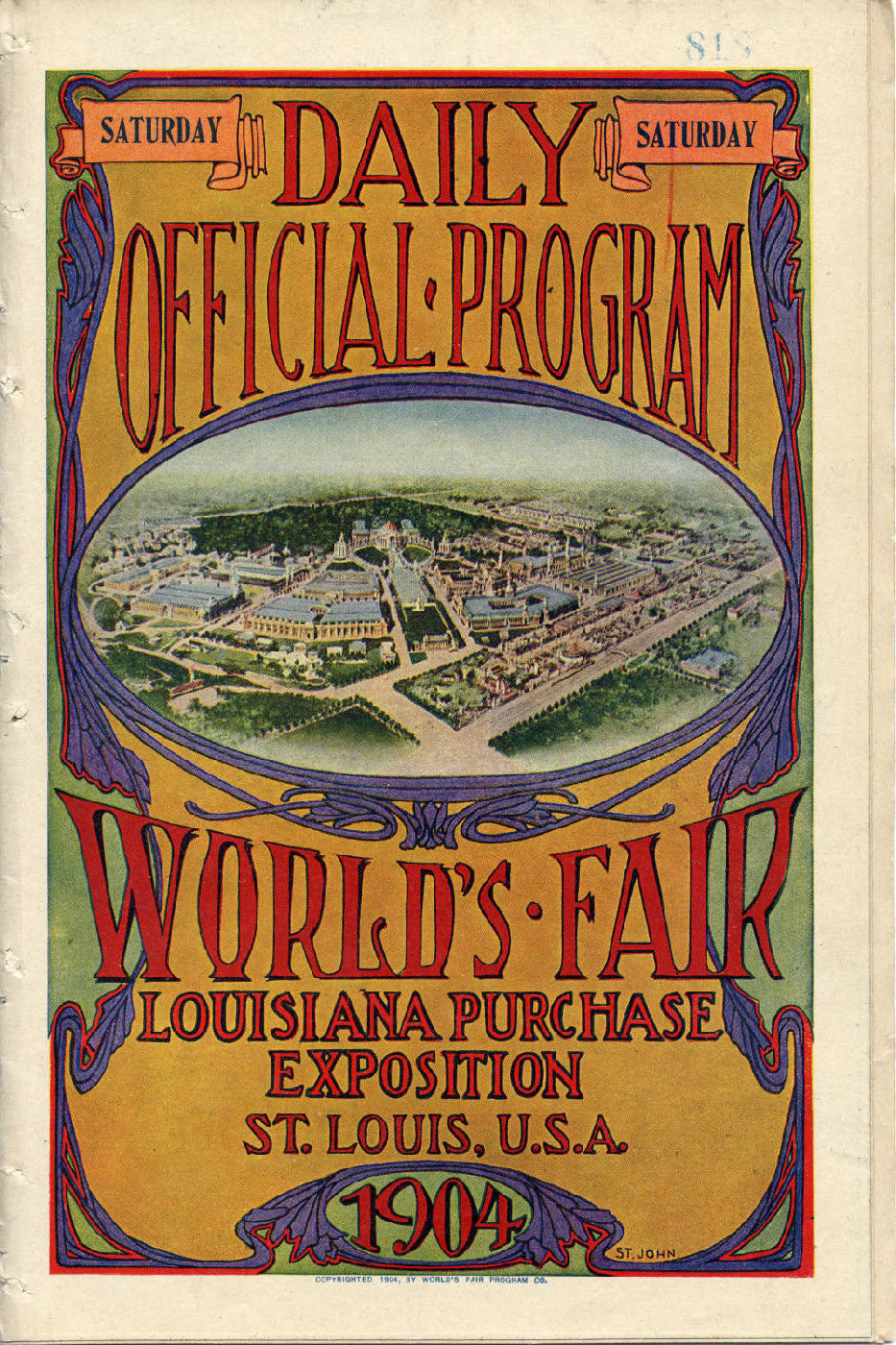
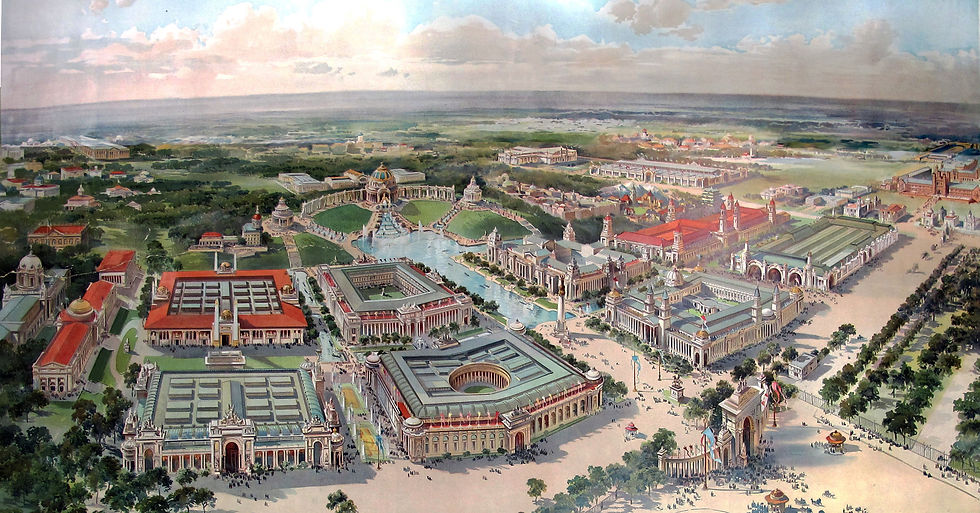
Created to celebrate the centenary of America's purchase of Louisiana from France, it was officially called The Louisiana Purchase Exposition and would become one of the largest public exhibitions the world had ever seen.
Spread across more than 1,200 acres, the fair featured around 1,500 buildings, electric lighting on a scale few visitors had ever witnessed, moving walkways, international pavilions and exhibits from more than 60 countries. It revealed futuristic technologies: X-ray machines, wireless communication, early motor cars. It popularised and introduced some iconic American food and drinks too: ice cream cones, candy floss (originally called ‘fairy floss’), iced tea and even cemented the hamburger’s place as the fast food supremo. Overall, the fair attracted almost twenty million visitors during the seven months it ran.
Amongst such esteemed company, Robert promoted Dr Pepper – and the Artesian Manufacturing and Bottling Company’s extended range of products that included Dr Pepper's Phos-Ferrates (highlighting the brain and digestion-aiding aspects of phosphorus and iron) and the intriguingly titled Celery Champagne (marketed as a refreshing, stomach-settling tonic).
After the Fair, Dr Pepper went supersonic. In July 1905, Robert and Wade purchased a plot of land at the corner of 5th and Mary Street in Waco for $6,000, selecting a local architect called Milton Scott to design their new state-of-the-art Romanesque Revival company headquarters. The production of Dr Pepper – and the rest of their portfolio – began there in 1906 (the building houses The Dr Pepper Museum today). The Southwestern Soda Fountain Company moved from Dallas to Waco in 1907 to unite the business.

Following Wade’s death in 1924, Robert Lazenby became President and helped steer the company through one of the most turbulent periods in American history: the Wall Street Crash of 1929 and the Great Depression that followed.
Dr Pepper survived. Perhaps because it had positioned itself not simply as a refreshing drink but as daily necessity. In the late 20s and early 30s, it devised a 10-2-4 campaign, selling itself as an essential pick-me-up when people lost energy around 10am, 2pm and 4pm. It was a clever pitch, transforming Dr Pepper from an occasional indulgence into a habit – an early and remarkably effective example of occasion-based marketing.
Robert remained at the helm of the business until his death on 17th April 1941 in Highland Park, Dallas County (now known as the ‘Beverly Hills of Texas’), and was buried in Restland Cemetery, Dallas. Coincidentally, it was the same year that Charles Alderton died too.
The drink that began life behind a marble soda fountain in a small Texas pharmacy has become a global phenomenon. Today, Dr Pepper is sold around the world, with recipes subtly adapted to suit local tastes and regulations (it can even be enjoyed hot).
More than 140 years after it was dreamt up, the original recipe still remains one of the most closely guarded secrets in the food and drink industry. Unlike a patented invention, which eventually enters the public domain, a recipe can remain secret indefinitely. Charles Alderton and Wade Morrison submitted no patent listing the ingredients, Robert Lazenby left no scientific paper explaining the formulation, and no surviving notebook reveals the exact proportions. Rare in a world where almost everything can be looked up in an instant.
Today, Dr Pepper proudly declares itself to be made from a unique blend of 23 flavours. But what those flavours are is still a mystery. And the company isn't telling.
After almost a century and a half, perhaps that's Dr Pepper's greatest trick. We know where it came from. We know who made it. We know how it conquered the world. But when it comes to what actually makes it taste like Dr Pepper, we're still none the wiser.


Comments